What could stop you building a successful career as a Professional Celebrant?

A realistic look at the potential pitfalls of launching and sustaining a celebrant career:
This is an important question and one that potential students are right to ask.
Whether you are considering a career change, returning to work or looking for a flexible role that is both interesting and fulfilling, training to become a professional celebrant can be a life-changing decision. Before beginning that journey, we encourage every prospective student to think carefully about the personal, practical and financial impact that celebrancy may have on their life.
Building a successful career as a professional celebrant is deeply rewarding, but it also asks a great deal of you. The work can be emotionally demanding, intellectually challenging and practically unpredictable. It requires much more than the ability to write and deliver a ceremony.
At Celebrant Circle, we are incredibly proud of the depth of our professional celebrant training and the ongoing care, mentoring and support we offer. We invest heavily in ensuring that every student completes their course with the skills, knowledge and confidence to begin building a successful celebrant business.
However, it is important to acknowledge something that may be uncomfortable to discuss: not everyone who completes celebrant training will thrive in the profession.
That is not necessarily a reflection of the quality of their training or their technical success during the course. It reflects the complex and deeply human nature of the role. No ethical celebrant training provider can guarantee that a student will receive work. Training provides a strong foundation, but lasting success also depends on how an individual applies what they have learned, responds to feedback, builds relationships and continues to develop.
Celebrancy is a deeply human profession

Working as a celebrant is not simply about learning processes and protocols or writing and delivering a ceremony script. It is about empathy, connection and trust.
It is about reading the room and understanding what a family or couple may need from you. It is knowing how to communicate sensitively with a grieving family, how to make a wedding couple feel heard and understood, and how to remain calm and reassuring when emotions are running high or plans change unexpectedly.
It is also about developing and maintaining trusted professional relationships. Funeral celebrants need to work well with funeral directors, arrangers, crematorium teams and other funeral professionals. Wedding celebrants may work alongside wedding planners, venues, photographers, musicians and many other suppliers. Your conduct affects not only how clients see you, but whether fellow professionals feel confident recommending and working with you again.
These qualities are nuanced and sometimes difficult to define. Excellent celebrant training can help students recognise and develop them, but no course, however comprehensive, can shape every aspect of an individual’s personality or guarantee how they will respond in every real-life situation.
The same is true in many professions. A qualification provides evidence of learning, but it does not automatically create a thriving business. Technical skill is essential, but personality, judgement, mindset, motivation and self-awareness all play a significant part.
Communication, empathy and emotional boundaries

Warmth, empathy and strong listening skills sit at the heart of professional celebrancy. However, finding the right balance is important.
For example, sharing too much about your own experiences of grief can unintentionally move the focus away from the bereaved family.
Sympathy that feels excessive or rehearsed may be uncomfortable rather than reassuring. Conversely, professionalism should never become emotional distance. A manner that feels too formal may be interpreted as cold or unfeeling.
Confidence also requires balance. A calm and assured celebrant helps clients feel safe, but overconfidence can come across as insensitive or leave people believing their wishes are not being heard. Too little confidence may cause a family, couple, funeral director or venue to question whether the celebrant can lead such an important occasion with care and authority.
Healthy emotional boundaries matter too, particularly for funeral celebrants. Caring deeply does not mean carrying every family’s grief as your own. Without appropriate boundaries, reflection and support, the emotional demands of the work can become difficult to sustain.
All these areas can be developed, but they require honest self-reflection and a genuine willingness to learn.
First impressions, reliability and professional presentation

First impressions really do matter, particularly when meeting people during vulnerable or highly emotional moments. They also matter when introducing yourself to funeral directors, wedding planners, venues and other potential sources of work.
Professional presentation is not about changing your personality or conforming to one style. It is about showing care and respect. Details as simple as clean shoes, appropriate clothing and a freshly ironed shirt or outfit can communicate that you understand the importance of the occasion and have prepared properly for it.
However, professionalism goes much further than appearance. It includes:
Arriving on time and allowing for delays
Responding to enquiries promptly and courteously
Being fully prepared for meetings and ceremonies
Checking names, relationships, dates and pronunciations
Communicating clearly with clients and fellow professionals
Following through on promises and meeting every agreed deadline
Remaining calm, discreet and adaptable when something changes
People need to know that they can rely on you. A single beautifully delivered ceremony may create a positive impression, but it is consistent professionalism that builds a lasting reputation.
Writing skills and attention to detail

Writing is a core professional celebrant skill. Every ceremony script should be thoughtful, engaging, factually accurate and true to the people at its centre.
When working as a wedding celebrant, there is often a longer period to get to know a couple, explore their story, and refine the ceremony with them. Funeral celebrants usually work to much tighter deadlines, with limited time to gather precious memories, understand complex family relationships and create a ceremony that feels personal and accurate.
In both areas of celebrancy, spelling, grammar and attention to detail matter. A misspelt name, an incorrect date or a misunderstood relationship can cause real hurt and undermine confidence. Careful checking, proofreading and preparation are therefore essential parts of the role.
Writing skills can absolutely be strengthened. The potential pitfall is not needing to improve; it is being unwilling to recognise where improvement is needed or failing to put in consistent effort to develop the skill.
Treating celebrancy as a business
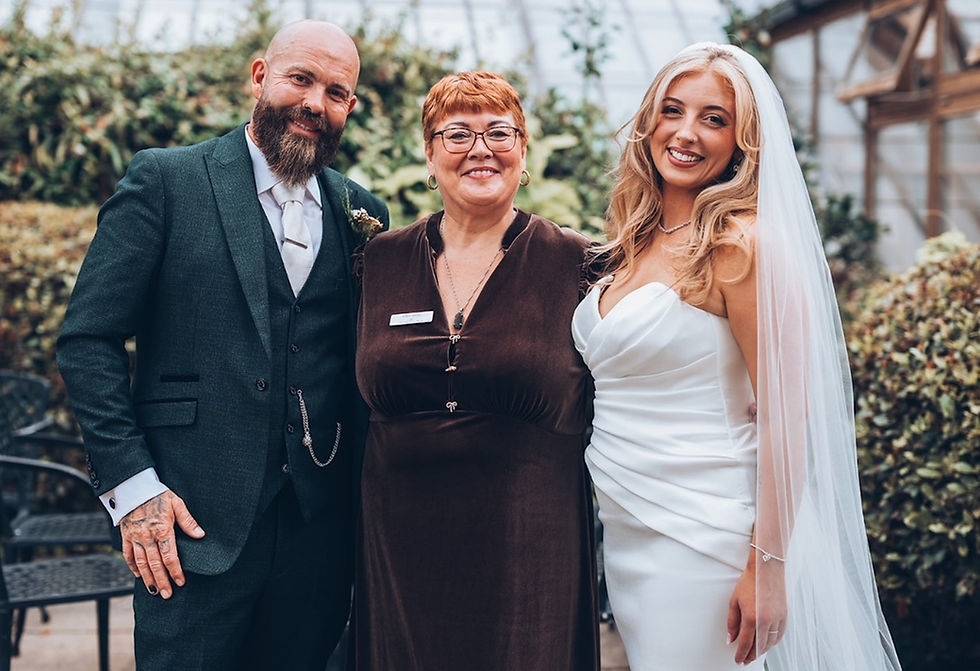
Many people are drawn to a career as a celebrant because the work is meaningful. That sense of purpose is important, but a successful celebrant business still needs to be run as a business.
It requires marketing, networking, administration, financial planning and resilience.
You may need to create and maintain a professional online presence, respond to enquiries, attend wedding fairs or local events, build relationships with funeral directors and wedding venues, manage bookings and contracts, keep accurate financial records and continue promoting your services even during quieter periods.
It can feel uncomfortable to market yourself, particularly when your work involves bereaved families or deeply personal occasions. However, ethical marketing is not about being pushy. It is about helping the right people understand who you are, what you offer and why they can trust you.
Without a clear strategy and sustained action, even a highly capable funeral or wedding celebrant may struggle to gain traction. Relying on a single funeral director, venue or source of referrals can also leave a business vulnerable. Strong professional relationships matter, but so does building a varied and sustainable route to work.
Expecting success too quickly
Another potential pitfall is expecting a full diary immediately after qualifying.
Establishing yourself as a professional celebrant takes time. Wedding work can be seasonal, and couples may book many months, or even years, ahead. Funeral celebrancy often depends on trusted relationships and recommendations that need to be earned gradually. There may be periods when enquiries are slow or when another celebrant is chosen.
This does not necessarily mean you are doing something wrong. It does mean that realistic expectations and financial planning are important. Many new celebrants build their practice alongside existing employment or another source of income while their reputation and network grow.
Resilience is essential, but so is the ability to review what you are doing. Persistence should be accompanied by reflection, learning and, where necessary, a willingness to adjust your approach.
The importance of self-reflection and feedback

When a celebrant business is not progressing as hoped, it can be tempting to look only at external reasons. Sometimes those external factors are entirely valid. The local market may be crowded, referrals may take time, and circumstances may change.
However, some of the most valuable insights come from looking inward and asking:
How do I come across to families, couples and other professionals?
Do I listen carefully, or am I sometimes too quick to offer my own ideas?
What feedback have I received, and how have I responded to it?
Are there areas of my writing, delivery or business practice that need more attention?
Am I consistently taking the actions needed to make my celebrant business visible?
Where might I need to grow, adapt or ask for support?
These are not always easy questions, but they are essential for anyone who wants to develop as both a celebrant and a professional.
Receiving constructive feedback can feel uncomfortable, especially when you care deeply about your work. Yet the celebrants who flourish are often those who can listen without immediately becoming defensive, consider what is useful and take meaningful steps forward.
Celebrant training is the beginning, not the end
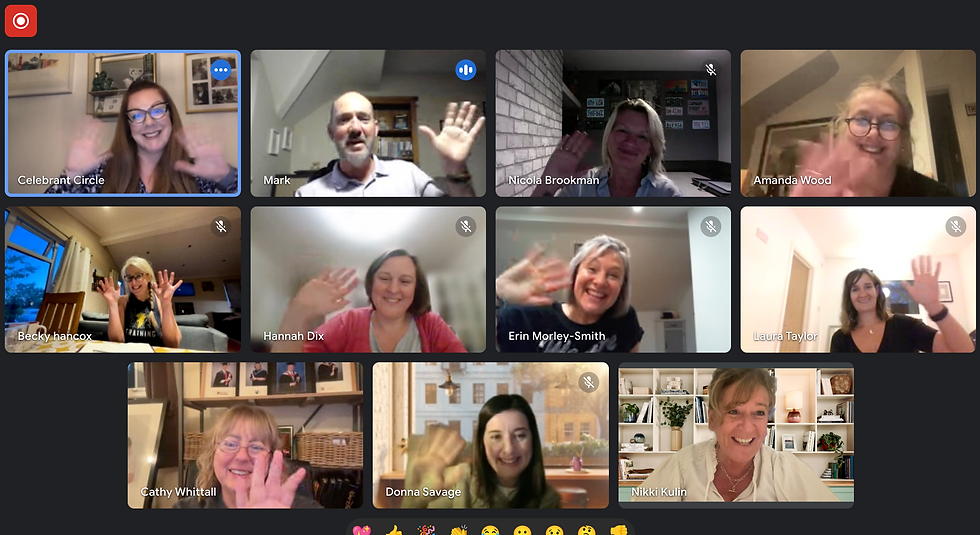
One of the clearest patterns we have observed is that celebrants who build sustainable and fulfilling careers often remain actively engaged long after their initial training.
They take part in continuing professional development for celebrants, seek mentoring, attend post-training programmes and make use of opportunities such as our weekly Celebrant Surgery sessions. They continue learning, asking questions and refining their work. Just as importantly, they connect with their peers, sharing experiences and supporting one another through the inevitable highs and lows of self-employment.
This ongoing involvement strengthens skills, confidence and resilience. It also creates a sense of professional community in what can otherwise be a solitary role.
Initial celebrant training provides the foundation. Continuing professional development, reflection and meaningful connection help turn that foundation into a sustainable career.
Recognising that celebrancy may not be the right fit

It is also important to say that recognising a mismatch is not a failure.
Sometimes, through celebrant training or early professional experience, a person discovers that the role is not quite right for them. They may find the emotional demands too great, the unpredictability difficult or the business-building element less appealing than they expected.
That self-awareness is valuable. It allows someone to redirect their skills and energy towards work that may be a better fit for their strengths, circumstances and personality.
For those who do want to continue, the journey does not end when challenges arise. Skills can be refined. Confidence can be built. Communication can improve. Business knowledge can be learned. With openness, humility and a willingness to evolve, many obstacles can be overcome.
Success is a partnership

At Celebrant Circle, our role as a professional celebrant training and membership organisation is to provide the highest possible standard of teaching, guidance, mentoring and ongoing support. We are here to equip, encourage, and challenge our students and members, and to help them develop the skills needed for a rewarding career as a celebrant.
However, no training provider can step into each individual's shoes or do the ongoing work on their behalf.
Ultimately, success as a professional celebrant is a partnership between the quality of the training and the commitment of the person receiving it. It requires knowledge and practical ability, as well as self-awareness, adaptability, integrity, resilience, and a genuine commitment to personal and professional growth.
Approached in this way, even difficult moments can become valuable opportunities, not only to improve your work, but to understand more clearly who you are, what you offer and how you connect with others.
If you are considering celebrant training, or you are already working as a celebrant and would value professional support, mentoring and community, we would be delighted to talk with you.
Learn more about professional celebrant training with Celebrant Circle or book a friendly discovery call.
We would love to chat with you.
Proud to set the standard in support, training and community for professional celebrants.


Comments